

 List of Articles

 Search by Area
 Book your trip
 Tour
 Local Experience
 Rental Car
 Hotels
 Golf
 VILLA
 Search articles
 Tour search
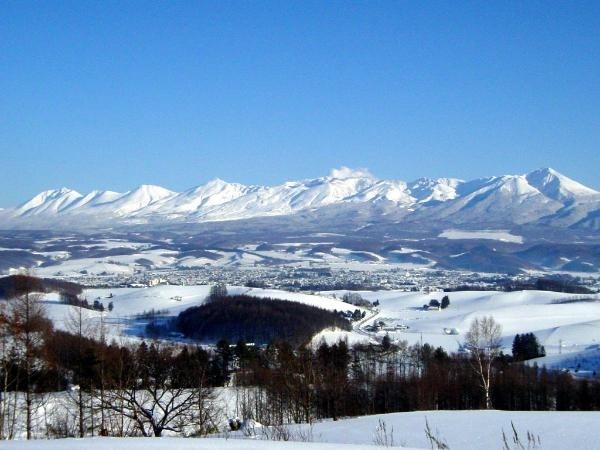
September Hokkaido Travel Guide (2025 Definitive Edition) | Hokkaido Lab
-

- All of Hokkaido
-

- Last updated: September 8, 2024
But for those of you who are unsure where to go, we'll introduce some absolutely recommended spots from a truly fantastical world beyond your imagination.
I hope that after reading this article, you will experience the charm of enjoying the outdoors in the bitter cold.
 Table of contents
1. Must-see sights in Hokkaido in January
1-2. Drift ice in the Sea of Okhotsk
2. Must-see events in Hokkaido in January!
2-1. Sounkyo Ice Waterfall Festival
3. Hokkaido specialties you'll want to eat in January!
3-1. Bluefin tuna from Toi, Hakodate
3-2. Sea urchins from Shiretoko Rausu
4. Weather and temperature in Hokkaido in January
1. Must-see sights in Hokkaido in January
1-1. Asahiyama Zoo Winter Zoo
Asahiyama Zoo is especially popular in the summer.
It's perfectly natural to want to see animals in cool Hokkaido during summer vacation.
However, the climate in Asahikawa, where temperatures can exceed 30 degrees Celsius even in Hokkaido, is a bit harsh for Asahiyama Zoo, which has many animals from northern regions, and the animals are somewhat exhausted.
 Image source: Asahikawa Tourism Photo Library
The animals of the northern regions are at their most vibrant and are best seen this January.
The penguins are incredibly popular for their adorable gait, and their strolls are a major draw. Later, ferocious animals like tigers and snow leopards also stroll around their enclosures as if they've found their own way, or take comfortable naps.
The polar bears looked exactly as they do on television when you see them on the ice fields. This truly exemplifies the essence of behavioral exhibits.
Naturally, animals that are sensitive to the cold won't go outside, but giraffes and rhinos sometimes linger around, seemingly enjoying the scenery and climate different from their birthplace.
As a zoo in the north, it boasts an excellent location this January. I highly recommend visiting.
 Image source: Asahikawa Tourism Photo Library
Basic Information
Asahiyama Zoo Winter Zoo
Event Period (Winter Opening/Typical): Mid-November to Early April
Access: From JR Hakodate Main Line "Asahikawa Station," take Asahikawa Electric Railway bus number 41, 42, or 47 for approximately 40 minutes and get off at "Asahiyama Zoo."
Admission fee: 1,000 yen for adults, free for junior high school students and younger.
For inquiries, please contact Asahiyama Zoo in Asahikawa City at 0166-36-1104.
website http://www.city.asahikawa.hokkaido.jp/asahiyamazoo/
1-2. Drift ice in the Sea of Okhotsk
Typically, drift ice approaches the Hokkaido coast in mid-January, coming within about 40 km of the coast.
This moment marks the start of drift ice sightseeing. The drift ice approaches the land day by day, separating the azure sea and the blue sky.
To enjoy the beautiful contrast with the ocean, January might be a better time than February when everything is completely covered.
Ice floe sightseeing boats depart from terminals in Monbetsu and Abashiri in search of drift ice.
On the drift ice, you might see seals raising their young in an environment free from natural predators, or eagles using the drift ice as a foothold to travel all the way to Hokkaido.

They are so small they are invisible to the naked eye, but there must be sea angels (Clione) gracefully drifting in the sea beneath the drift ice.
The drift ice in the Sea of Okhotsk is one of the southernmost forms of drift ice found in the Northern Hemisphere.
Moreover, tasting the first harvest of the season is nothing short of a feast for the eyes. Please enjoy this jewel that shines amidst the harsh winter of Hokkaido.
This is because, perhaps due to the effects of recent global warming, the time when the seas open and the drift ice disappears is gradually getting earlier. What used to be visible in April can now be reliably seen until the beginning of March. Hurry!

~Garinko II operates (Monbetsu)~
Operating period: Mid-January to late March
Access: From JR Sekihoku Line "Engaru Station," take a local bus and get off at "Okhotsk Tower Entrance"; from JR Senmo Line "Abashiri Station," take an express bus (operates only in winter); from JR Hakodate Line "Asahikawa Station," transfer to an intercity bus at "Monbetsu" and then take a bus to "Kaiyo Koryukan" (operates only in winter); or from "Memanbetsu Airport," it's about a 2-hour drive.
Admission: Adults 3000 yen, Children 1500 yen (Reservations required)
*The Garinko III IMERU costs 4000 yen for adults and 2000 yen for children.
For inquiries, please contact Okhotsk Garinko Tower Co., Ltd. at 0158-24-8000.
~The icebreaker "Aurora" for drift ice sightseeing is now in operation (Abashiri)~
Operation period: Late January to early April
Access: 20-minute walk from JR Senmo Main Line "Abashiri Station" or approximately 5 minutes by bus from platform 3 to "Abashiri Bus Terminal" and then a 10-minute walk (winter only: take a bus from platform 1 at JR Senmo Main Line "Abashiri Station" and get off at "Michi-no-Eki Ryuhyo Saishosen Noriba").
Admission fees: Adults (junior high school age and older) 4000 yen, elementary school students 2000 yen. *Infants are free.
For inquiries, please contact Doto Tourism Development Co., Ltd. at 0152-43-6000 (reception hours: 9:00 AM - 18:00 PM).
1-3. Nayoro Sun Pillar
Diamond dust is a phenomenon that can only be seen in some mountainous areas of Japan, such as Nagano and Toyama prefectures, and in Hokkaido.
This phenomenon occurs when water vapor in the air freezes and floats in the air, scattering fragments of light all around our field of vision.
Then, when the rising or setting sun shines on that diamond dust, it looks as if a staircase of light is stretching into the sky, which is the phenomenon known as a sun pillar.
 Image provided by: Kamikawa General Promotion Bureau
This phenomenon only occurs at temperatures below -15℃, and the first condition is that there is no snow or clouds.
This mystical sight can be observed in the Kamikawa region, including Nayoro City.
As the rising sun begins to peek over the mountain ridge, a column of light stretches upward into the sky in the opposite direction.
You will feel something that cannot be expressed by the word "emotion" as it runs up your spine.
A fleeting glimmer that soon vanishes into thin air. If you can experience that moment, it's sure to be a lifelong memory.
 Image provided by: Kamikawa General Promotion Bureau
Visit the Kamikawa region in mid-to-late January, the coldest time of year, to experience something truly moving.
Nayoro City, in particular, boasts many facilities named after sun pillars, making it famous for its spectacular winter scenery.
Nayoro Sun Pillar Basic Information
Period: From the end of December to the beginning of March
For inquiries, please contact the NPO Nayoro Tourism and Community Development Association.
Address: 1-10, Higashi 1-jo Minami 7-chome, Nayoro City, Hokkaido 096-0001, Japan (Ekimae Koryu Plaza Yorona 1F)
TEL +01654-9-6711-XNUMX
FAX +01654-9-6712-XNUMX
Please also check out these related articles.
-

- Salmon, a taste of autumn and winter! Locally recommended cooking methods
-

- It's a shame to only enjoy the music! Four summer festivals that capture the essence of Hokkaido
-

- Perfect to enjoy with your meal! 7 recommended sakes to drink in Hokkaido
-

- 16 of Hokkaido's Most Scenic Driving Routes – Drive Through Hokkaido's Most Beautiful Landscapes for an Exhilarating Experience!
-

- Enjoy the beautiful nature! We'll tell you about sightseeing spots and highlights for your spring trip to Hokkaido♪
-

- These 6 must-visit shaved ice shops in Hokkaido will change your perception!
-

- Six famous wineries in Hokkaido that are easy to drop by!
-
- 7 Local Chains in Hokkaido | Trusted by Hokkaido Residents and Supported by Strong Local Pride

Hokkaido from all over Japan! Find affordable Hokkaido package tours here.

Make your trip even more enjoyable! Book your Hokkaido local experience tour here.

Combine flights and hotels freely for great deals! Dynamic Packages
Introducing our sister site (please check it out if you're interested)


 Choose from area
-
 Sapporo/Jozankei
-
 Hakodate, Southern Hokkaido, Okushiri
-
 Northern Hokkaido, Wakkanai, Rishiri and Rebun Islands
-
 Asahikawa/Sounkyo
-
 Eastern Hokkaido (Abashiri, Kitami, Shiretoko)
-
 Kushiro, Akan, Kawayu, Nemuro
-
 Tokachi-Hidaka
-
 Furano, Biei, Tomamu
-
 Noboribetsu and Lake Toya
-
 Chitose, Lake Shikotsu, Yubari
-
 Otaru, Rusutsu, Niseko

 Search by trending tags
Popular article ranking
Yesterday
1 months


