

 List of Articles

 Search by Area
 Book your trip
 Tour
 Local Experience
 Rental Car
 Hotels
 Golf
 VILLA
 Search articles
 Tour search
Even Hokkaido natives might be surprised? Customs and culture unique to Hakodate and southern Hokkaido.
-

- Post
-

- Last updated: September 10, 2018
 Table of contents
1. Is it like Halloween? Hakodate's Tanabata Festival
2. Why in July? Hakodate's Obon Festival
3. Hakodate's summer is marked by the Minato Odori dance, not the Bon Odori.
4. Japanese style? Western style? A unique blend of Japanese and Western architectural styles.
5. Even Hokkaido natives can't understand it? The Hakodate accent

Hakodate, with its exotic streetscapes, beautiful night views, and delicious seafood, has many attractions and attracts many tourists from both Japan and abroad every year.
Hakodate has become very famous as a tourist destination, but in fact, it has unique customs and culture that cannot be found in other regions of Hokkaido.
In this article, I, a native of Hakodate, will introduce you to the unique customs and culture of Hakodate and southern Hokkaido that you wouldn't discover just by visiting as a tourist.
Whether you've never been to Hakodate before or you've been many times, you're sure to be surprised!
<Table of Contents>
1. Is it like Halloween? Hakodate's Tanabata Festival
2. Why in July? Hakodate's Obon Festival
3. Hakodate's summer is marked by the Minato Odori dance, not the Bon Odori.
4. Japanese style? Western style? A unique blend of Japanese and Western architectural styles.
5. Even Hokkaido natives can't understand it? The Hakodate accent
6. Funerals in Hakodate where cremation takes place early.
Final thoughts
1. Is it like Halloween? Hakodate's Tanabata Festival

Every year as July approaches, supermarkets in Hakodate and the surrounding areas are filled with snacks like "Umaibo" and small bags of "Koala's March."
And next to it, you'll always find a bamboo decoration for Tanabata.
This scenery might be unfamiliar to people outside of Hakodate, but it's a familiar sight for Hakodate residents.
This is because, in Hakodate and the surrounding towns, on the night of Tanabata, children go around to neighbors' houses and receive sweets.
This custom, which is similar to Halloween, can be seen in central Hokkaido as well, but there are some differences between Hakodate and central Hokkaido.

One of the differences is the timing of Tanabata (the Star Festival).
In Hakodate, it takes place on July 7th, but in central Hokkaido (Sapporo, etc.), it's on August 7th. Another difference is the lyrics of the song sung to receive sweets.
In Hakodate, they sing, "Take ni tanzaku, Tanabata festival, let's celebrate with lots of celebratory rings, give me one candle."
In central Hokkaido, they apparently sing, "Give us a candle, give us one, if you don't, we'll bite you, and we'll bite you as a bonus."
Both events originally began with people going around asking for candles to put in lanterns, so the songs are about asking for candles. However, nowadays, instead of candles, sweets that children enjoy are distributed. That's why houses with children have lots of sweets on July 8th.
2. Why in July? Hakodate's Obon Festival

Obon is a time when deceased ancestors are believed to return to this world.
While this event is generally held in mid-August throughout Japan, in Hakodate it takes place in July, just like Tanabata.
However, this custom seems to be practiced only in limited areas of present-day Hakodate city, particularly around Mount Hakodate, where many people have family temples or graves.

There are various theories about this custom, but the most plausible ones are that "when the calendar changed from the lunar calendar to the solar calendar, it was changed to July, which is the new calendar month," and that "it was changed so as not to clash with the grand festival of Hakodate Hachimangu Shrine, which is held on August 15th."
Either way, Obon in July is quite rare throughout Japan, isn't it?
3. Hakodate's summer is marked by the Minato Odori dance, not the Bon Odori.

Hakodate has its Obon festival in July. But does that mean that Bon Odori (Bon dance) is also performed in July? Not necessarily.
Hakodate's summer festival runs from August 1st to 5th, featuring fireworks displays and parades. During this period, and after the festival, neighborhood associations erect platforms and perform the Minato Odori and Ika Odori dances, which are also danced in the parades.

The Minato Odori, a dance performed to original music with lyrics that reflect the port city of Hakodate, is a summer dance for the people of Hakodate.
I also have memories from my childhood of dancing in the town park and getting ice cream and candy on the way home.
4. Japanese style? Western style? A unique blend of Japanese and Western architectural styles.

The retro buildings constructed during the era when Hakodate prospered from shipping and shipbuilding, as well as the churches and other exotic structures, are popular tourist spots in Hakodate.
If you walk around the western district or the Bay Area, where there are many such buildings, you'll probably come across buildings like the one in this image.
For people from outside Hakodate, this building, with its Japanese-style first floor and Western-style second floor, might seem a little strange.
Although their numbers have decreased considerably now, there used to be many "hybrid Japanese-Western style houses" like this one in Hakodate.

This architectural style, which is rare not only in central Hokkaido but throughout Japan, is said to have originated from the idea of making the western district appear as a town lined with Western-style buildings when viewed from ships entering the harbor.
Apparently, in the hilly western district, only the second floor of the houses is visible from the harbor, so the rational idea was to make only the second floor Western-style.
However, it is also said that at the time, Western-style construction was more expensive than building a Japanese-style house, so they only built two stories, or that a Japanese-style house with a wide frontage on the first floor was easier to use for business.
5. Even Hokkaido natives can't understand it? The Hakodate accent

When I moved to Sapporo for college, I was often told, "You're from Hakodate, but you don't have much of an accent."
As this statement suggests, Hakodate has a unique accent.
Of course, other areas of Hokkaido have their own accents, but they are completely different from those of Hakodate.
In central Hokkaido, particularly around Sapporo, there are some regional accents at the word level, such as "namara" and "shitakke," but the intonation is flat, so the language spoken is not significantly different from standard Japanese.
However, perhaps because Hakodate is also a fishing town, the people there speak with a very strong intonation.

The intonation is similar to that of a port town in Hokkaido, but it is said to be very similar to the accent of the Tohoku region.
It is said to be particularly similar to the accent of Aomori Prefecture.
Because of this, when someone from Sapporo talks to someone from Hakodate who speaks quickly, it can be difficult to understand what they're saying.
6. Funerals in Hakodate where cremation takes place early.

Funeral customs vary greatly depending on religion, sect, and region, but Hakodate has some quite unique practices.
That's the timing of the cremation.
While cremation generally takes place after the funeral service throughout Japan, in Hakodate, it is common for cremation to take place the day after the wake, before the funeral service.
Therefore, if you want to see the deceased's face and say your final goodbyes, you must attend the wake.

There are several theories about this custom, but the most plausible one is that it was influenced by the two major fires that occurred in Hakodate.
In the windy city of Hakodate, large fires occurred frequently.
Among these, a major fire in 1934 reportedly claimed the lives of over 2000 people, and it is said that the practice of cremating bodies without waiting for funerals at that time led to the current custom.
Final thoughts
We've introduced some of the unique customs and culture of Hakodate and southern Hokkaido.
Some of these customs, like Tanabata, have spread not only within Hakodate but also to neighboring areas, while others, like the blend of Japanese and Western architectural styles, are becoming less common.
The next time you visit Hakodate, please take some time to reflect on these customs and cultural aspects.
Please also check out these related articles.
-

- Experience making beautiful glass art in Hakodate! [Experience Report]
-

- Sweets packed with Tokachi flavors♪ I spent some relaxing time at Tokachi Toteppo Kobo!
-

- A bear farm and hot springs are a major draw! Recommended sightseeing spots in Noboribetsu
-

- Seven truly delicious coffee shops in Sapporo, chosen by locals!
-
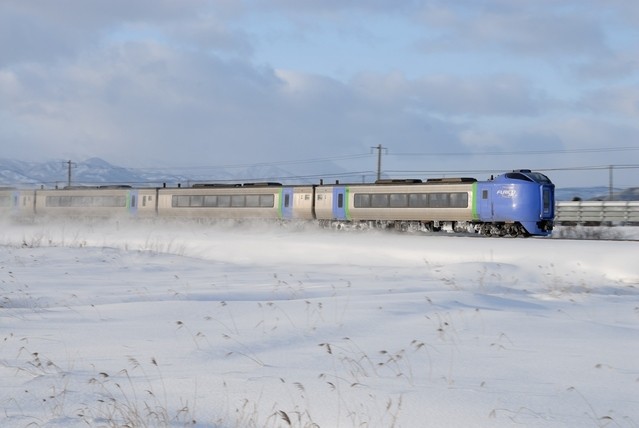
- [From Sapporo to Hakodate] We compared JR trains, express buses, airplanes, and cars!
-

- Released on March 25th! We'll explain the filming locations in Hakodate for the movie "P and JK"!
-

- To the ends of the earth, Shiretoko! Five secluded hot springs and open-air baths overflowing with wild charm.
-

- [Certified as one of Japan's New Top Three Night Views!] The night view from Mt. Moiwa in Sapporo is a must-see!

Hokkaido from all over Japan! Find affordable Hokkaido package tours here.

Make your trip even more enjoyable! Book your Hokkaido local experience tour here.

Combine flights and hotels freely for great deals! Dynamic Packages
Introducing our sister site (please check it out if you're interested)


 Choose from area
-
 Sapporo/Jozankei
-
 Hakodate, Southern Hokkaido, Okushiri
-
 Northern Hokkaido, Wakkanai, Rishiri and Rebun Islands
-
 Asahikawa/Sounkyo
-
 Eastern Hokkaido (Abashiri, Kitami, Shiretoko)
-
 Kushiro, Akan, Kawayu, Nemuro
-
 Tokachi-Hidaka
-
 Furano, Biei, Tomamu
-
 Noboribetsu and Lake Toya
-
 Chitose, Lake Shikotsu, Yubari
-
 Otaru, Rusutsu, Niseko

 Search by trending tags
Popular article ranking
Yesterday
1 months


