

 List of Articles

 Search by Area
 Book your trip
 Tour
 Local Experience
 Rental Car
 Hotels
 Golf
 VILLA
 Search articles
 Tour search
The Ofune Ruins are generating high expectations for World Heritage status! Experience the romance of the Jomon period in Hakodate.
-

- Post
-

- Last updated: September 11, 2018
 Table of contents
2. Enter the Jomon Culture Center
Understanding the past allows us to re-examine the present.

Hakodate, one of Hokkaido's leading tourist cities, is known for Goryokaku Park, the Red Brick Warehouses, and the night view from Mount Hakodate. Because Commodore Perry visited the city during the late Edo period, it was one of the earliest cities in Japan to open up to the world, and as a result, the western district still retains a romantic, exotic atmosphere.
Hakodate, despite its seemingly idyllic image, is actually a city steeped in the Jomon period, with numerous Jomon-era archaeological sites. The Ofune site, in particular, is a Jomon site poised for World Heritage status. Seeking the romance of ancient times, I visited the Ofune site in Hakodate.
<Table of Contents>
1. To Minamikayabe area
2. Enter the Jomon Culture Center
3. Numerous artifacts
4. Ofune Ruins
Understanding the past allows us to re-examine the present.
1. To Minamikayabe area

Before visiting the Ofune Ruins, first head to the Jomon Culture Center. Both the Jomon Culture Center and the Ofune Ruins are located in the Minamikayabe district of Hakodate City.
Minamikayabe was incorporated into Hakodate City during the Heisei-era municipal mergers, but it was formerly a separate municipality called Minamikayabe Town. Therefore, it is located far from the city center of Hakodate.

If you're using a rental car or taxi, take Prefectural Road 83; it takes about 30 minutes from Hakodate Airport and about 50 minutes from Hakodate Station. If you're using public transportation, there's a Hakodate Bus from in front of Hakodate Station called "Hakodate/Shikabe (via Kawakumi)".
Take this bus and get off at "Usujiri Elementary School," then walk for about 10 minutes to reach the Jomon Culture Center. The journey takes approximately 1 hour and 40 minutes by bus alone.
This is a roadside rest area. It's right next to the Jomon Culture Center.
2. Enter the Jomon Culture Center

Upon entering, you'll find a ticket machine on your left; purchase your ticket there. After buying your ticket, hand it to the counter on your right. You'll receive a pamphlet, and then proceed inside.
First, you'll find Exhibition Room 1 on your left as you proceed. Here, you'll find exhibits showcasing the changes of the Jomon period and dioramas that recreate what life was like back then.
The Jomon period is believed to have lasted for approximately 1 years and is divided into several periods, such as the Early Jomon and Late Jomon.
Next, we'll go down the stairs to the first floor.
3. Numerous artifacts

The Jomon Culture Center is a two-story building, with the entrance on the second floor. Therefore, the main exhibition rooms are on the first floor. Exhibition Room 2 is located immediately after descending the stairs. Here, you can see actual Jomon period artifacts that have been excavated.
These are Jomon pottery pieces lined up on the wall immediately to the left upon entering the exhibition room. The pieces are arranged from left to right in order of increasing age, with a gap of 9 years between the oldest and newest pieces.

This stone, displayed directly on the surface, is believed to have been used by the Jomon people. It may just look like a large stone, but upon closer inspection, faint white lines can be seen in places, suggesting that someone used it.

On the left is the remains of a shell midden. On the right are the bones of fish, shellfish, and birds that were found there. Although it is called a shell midden, it was actually like a garbage dump at the time, and by studying shell middens, we can learn what kind of food people ate.
The Jomon people's diet, as discovered here, was rich, and they seem to have eaten things similar to what we eat today, such as scallops, clams, and abalone. They might even have been more luxurious than modern people.

The Jomon period is classified as the Neolithic period, and people used stone to create tools. It's hard for modern people to imagine, but when you look at the unearthed artifacts, you'll be amazed by their sophistication. There are arrowheads with thin, pointed tips and stone spears that are slender and sharply crafted, and they are all so intricate that it's hard to believe they were made of stone.
There are various types of stones used as raw materials, and some of them are made from obsidian.

This clay tablet was excavated at the Kakinoshima archaeological site, located very close to the Jomon Culture Center. It has a small indentation, and its shape and size suggest it is a child's footprint. Since it was unearthed from an adult's tomb, the prevailing theory is that it was a memento of a deceased child buried with the parents.

One of the highlights of the Jomon Culture Center's exhibits is a hollow clay figurine called "Kakku." This hollow clay figurine has no interior, and at its thinnest point, it is only 2 millimeters thick. It stands 41.5 centimeters tall and weighs approximately 1.7 kilograms.
It is one of the largest hollow clay figurines ever made and was designated a National Treasure in 2007.
It was discovered in 1975 by a housewife digging potatoes in her field at her home in Minamikayabe Town. Subsequent archaeological excavations in the surrounding area have uncovered Jomon period burial sites.
4. Ofune Ruins

After leaving the Jomon Culture Center, we headed to the Ofune archaeological site. It's about a 7-minute drive from the Jomon Culture Center. This site is one of the constituent sites of the "Jomon Prehistoric Sites in Hokkaido and Northern Tohoku," along with sites in Aomori, Akita, and Iwate prefectures, and is expected to be registered as a World Heritage Site.
However, I went too late, and the Ofune Ruins had already been closed. Apparently, because it snows in Hokkaido, it closes in mid-November. The next time it will be open to the public is in mid-April.
Understanding the past allows us to re-examine the present.
Unfortunately, we could only view the Ofune ruins from the outside, but the Jomon Culture Center was a fascinating facility. The Jomon period may seem far removed from modern times, but learning about life back then might offer some insights into how we live today.
Apparently, more excavations will be taking place around the center. I'm looking forward to seeing what discoveries they make.
<Hakodate City Jomon Culture Exchange Center>
Address: 551-1 Usujiri-cho, Hakodate City, Hokkaido 041-1613
TEL: 0138-25-2030
Opening hours: 9:00 AM to 5:00 PM (April to October)
9:00 AM to 16:30 PM (November to March)
Closed on Mondays (or the following Tuesday if Monday is a public holiday, the last Friday of the month, and during the New Year holidays).
Admission fee: 300 yen (general admission), 150 yen (students/children)
URL:http://www.hjcc.jp/
<Ofune Ruins>
Address: 575-1 Ofune-cho, Hakodate City, Hokkaido 041-1622
TEL: 0138-25-2030 (For inquiries, please contact the Hakodate Jomon Culture Exchange Center)
Business hours: 9:00 AM - 17:00 PM
Closed: Mid-November to mid-April
URL:http://www.hjcc.jp/
Please also check out these related articles.
-

- Must-see autumn foliage spots in and around Sapporo! 7 selections
-

- Spend your summer vacation playing in nature! Discover the charm of a summer at Rusutsu Resort!
-

- Enjoy sights you wouldn't normally see at the Chitose Air Base Air Show!
-

- Looking for a place to have tea in Sapporo? Here are 5 cafes directly operated by famous sweets shops!
-

- Organic herbs grown in Kitami | This is what the cafe & shop of agricultural corporation "Koyu Seikatsu" is like.
-

- Hashitani Confectionery | Addictive texture! Nemuro's famous confection, "Holland Senbei"
-
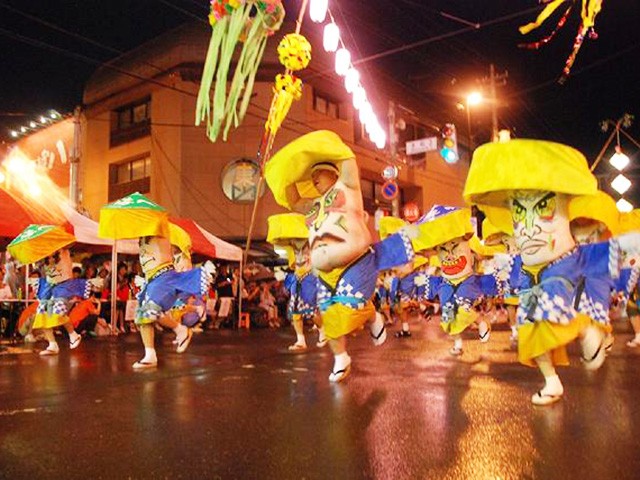
- Let's have fun with the locals! 6 of Hokkaido's best summer festivals! ☆
-

- Shiretoko's Winter Activities: 5 Must-See Experiences & Events

Hokkaido from all over Japan! Find affordable Hokkaido package tours here.

Make your trip even more enjoyable! Book your Hokkaido local experience tour here.


Combine flights and hotels freely for great deals! Dynamic Packages
Introducing our sister site (please check it out if you're interested)


 Choose from area
-
 Sapporo/Jozankei
-
 Hakodate, Southern Hokkaido, Okushiri
-
 Northern Hokkaido, Wakkanai, Rishiri and Rebun Islands
-
 Asahikawa/Sounkyo
-
 Eastern Hokkaido (Abashiri, Kitami, Shiretoko)
-
 Kushiro, Akan, Kawayu, Nemuro
-
 Tokachi-Hidaka
-
 Furano, Biei, Tomamu
-
 Noboribetsu and Lake Toya
-
 Chitose, Lake Shikotsu, Yubari
-
 Otaru, Rusutsu, Niseko

 Search by trending tags
Popular article ranking
Yesterday
1 months


