

 List of Articles

 Search by Area
 Book your trip
 Tour
 Local Experience
 Rental Car
 Hotels
 Golf
 VILLA
 Search articles
 Tour search
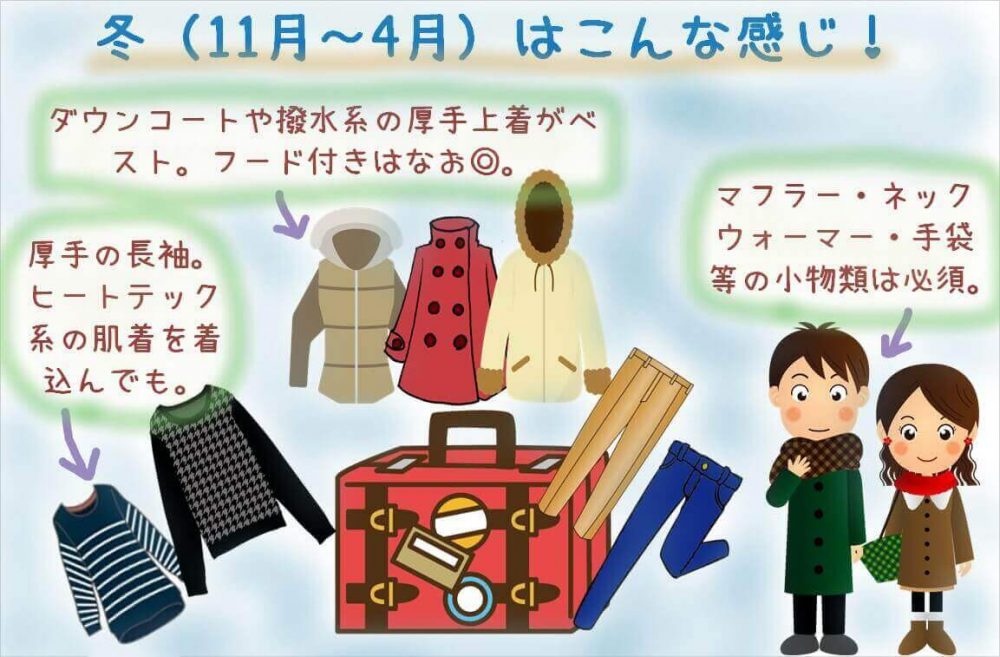
Here's a guide to preparing for your Hokkaido trip, organized by season! [Clothing Guide]
-

- Find your Hokkaido trip! Search, compare, and book affordable Hokkaido tours.
-

- Last updated: September 12, 2019
Hokkaido has distinct seasons and many places where you can enjoy the great outdoors, so it's natural to want to choose clothes that are appropriate for the time of year.
So, this time, as part of preparing for a trip to Hokkaido, we'll introduce clothing recommendations for each season.
I hope this is helpful!
 Table of contents
1. Climate throughout Hokkaido

*Created using data from the Japan Meteorological Agency.
The graph above shows the maximum and minimum temperature data for the year 2015, based on data collected in Sapporo.
As it's a northern region, you can see that its characteristics include long winters and short summers.
Typically, the first snowfall is observed on Mount Daisetsu in October, so there are considerable differences depending on the location.
Spring usually arrives around late April to Golden Week.
There are many famous spots for cherry blossoms, including Somei Yoshino varieties, and moss phlox, so if you want to enjoy the flowers, this season is the best time to go until around the end of August.
After that, the leaves begin to change color, and preparations for winter begin.

Because of the significant temperature difference, you'll likely need a bit more luggage than in other tourist destinations, but it would be much easier if you could keep everything within reasonable limits.
So, I've put together a guide on what criteria to use when choosing clothes for each season!
*This time, we'll focus on clothing, so we'll omit accessories such as gloves.
2. Preparing winter clothing

Winter clothing is the type that would make you most wary.
This is because many people worry that they might be faced with colder temperatures than they've ever experienced before.
But actually, choosing winter clothes is the easiest.
Because you just need to choose the right materials and wear them carefully.
The key lies in the "materials," so as long as you keep that in mind, you'll be fine!

■ For innerwear, wear a snug-fitting Heattech or your usual clothes.
■ Wool tops and long-sleeved T-shirts made of thermal fabric
■Down coat or water-repellent jacket, air protection parka, jacket coat, fleece full-zip jacket, etc.
■Long pants, leggings, sweatpants, etc.
During the winter months, the most important thing is to wear clothing that blocks the wind.
The biting cold of the seaside, the north wind, and snowfall can make the perceived temperature feel even lower.
Therefore, first and foremost, choose a material that is windproof (such as nylon).
Furthermore, because thermal fabric has the function of trapping warm air, wearing an air-protection parka or jacket coat made of windproof fabric over it creates the ultimate combination that prevents heat from escaping due to perspiration. Give it a try!
Also, the "Heattech" material, which has become popular in recent years, is very useful if you're spending a long time sightseeing outdoors.
Conversely, if you're doing a lot of indoor sightseeing, you might end up sweating because the facilities are warmer than on Honshu.
And if possible, I recommend that women also wear long pants when sightseeing.
If you'll be doing a lot of indoor sightseeing, combining thick leggings and tights is a good option.
Unfortunately, jeans take a long time to dry and are not suitable for winter.
For footwear, choose something that won't let water seep in, even in sleet or snow. Sneakers and leather shoes are a no-no.
3. Preparing summer clothes

Summer is the most pleasant season of the year.
As the data shows, the maximum temperature is 34.5 degrees Celsius, which is warm enough for short sleeves, but it's a different story in the mornings and evenings.
The temperature fluctuates wildly, with minimum temperatures reaching 11.5 degrees Celsius in July and 14.7 degrees Celsius in August, so caution is advised.
In other words, in the summer, you'll be fine as long as you bring items that can cope with temperature differences!
Let me introduce them to you right away♪

■Mainly short-sleeved T-shirts and long-sleeved T-shirts
■Cardigans, hoodies, etc.
■Shorts, skirts, jeans, etc.
The most essential item for summer is something you can throw on, like a cardigan.
While you can often get by in short sleeves during the day, you'll need a thicker jacket or cardigan in the mornings and evenings around the lake and mountains.
Also, it can still be cold, so it's probably a good idea to bring a long-sleeved T-shirt just in case.
And the activity that requires the most caution is "trekking, mountain climbing, etc."
Just like the walking paths around the lake, there are naturally many creatures living in the great outdoors.
To avoid problems such as scrapes from falling or mosquito bites, be sure to wear long sleeves and long pants.
Summer is a time when it's easy to let your guard down. But remember, summer is precisely the time when thorough preparation is essential.
4. Preparing your spring and autumn clothing

In Hokkaido, the season known as spring is the peak of flowering season. Cherry blossoms and other flowers bloom vibrantly everywhere.
The temperature is a pleasant 27-29 degrees Celsius, but it's still chilly in the mornings and evenings.

In autumn, temperatures vary by location, but while the actual temperature might seem warm at 22 to 27 degrees Celsius, the perceived temperature is lower.
Going out to see the autumn leaves means heading to the mountains or forests, which makes it feel even colder.
Therefore, the key point for spring and autumn is that you need an extra layer of clothing, such as a jacket.
Just remember that the actual temperature and the perceived temperature are different, and you'll be fine!
■Thick long-sleeved shirt or thin long-sleeved shirt, etc.
■ Cardigans, parkas, and coats (not trench coats)
■ Skirts, trousers, jeans, etc.
The key point to remember here is "layering."
You can wear light clothing underneath, but it's a good idea to prepare with the intention of layering up, such as adding a cardigan or hoodie, and wearing a coat in the mornings and evenings!
Also, clothes that are easy to put on and take off are easier to adjust.
When you go to see the autumn leaves and end up walking a lot and sweating, it's really helpful to have something you can quickly take off.
While boots are fine for walking around town, comfortable walking shoes are recommended during this season when you'll be doing more hiking in the mountains.
If possible, it's a good idea to bring two pairs of shoes, one for walking around town and one for everyday use, so you have a backup in case one gets dirty.
Final thoughts

What did you think?
Clothing choices vary greatly depending on the location and time of year, but as mentioned above, simply keeping in mind the important points for each season will make choosing your clothes much easier.
If you end up buying something locally and regret it, you'll dwell on it forever, so be sure to check the key points and enjoy creating your own unique outfit!
Please also check out these related articles.
-

- How to enjoy your trip to Hokkaido in August | Sightseeing, events, and experiences!
-

- How to choose a Sapporo Snow Festival tour more affordably and wisely [2021 Edition]
-
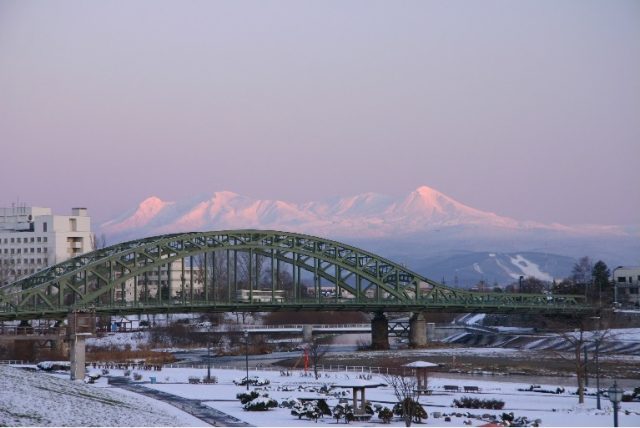
- A summary of sightseeing spots and attractions in the Asahikawa and Kamikawa areas during winter.
-

- Spring after the drift ice melts! Crabs! Phlox! Highlights of the Okhotsk and Shiretoko areas.
-

- Recommended tourist spots in the Okhotsk and Shiretoko area that will make you fall in love with winter.
-

- A summary of winter sightseeing and attractions in the Noboribetsu, Lake Toya, and Muroran area.
-

- Enjoy a trip to Hakodate in the spring! A summary of sightseeing spots and attractions in Hakodate.
-

- Enjoy spring in Hokkaido in the Noboribetsu, Lake Toya, and Muroran areas! Recommended sights.

Hokkaido from all over Japan! Find affordable Hokkaido package tours here.

Make your trip even more enjoyable! Book your Hokkaido local experience tour here.

Combine flights and hotels freely for great deals! Dynamic Packages
Introducing our sister site (please check it out if you're interested)


 Choose from area
-
 Sapporo/Jozankei
-
 Hakodate, Southern Hokkaido, Okushiri
-
 Northern Hokkaido, Wakkanai, Rishiri and Rebun Islands
-
 Asahikawa/Sounkyo
-
 Eastern Hokkaido (Abashiri, Kitami, Shiretoko)
-
 Kushiro, Akan, Kawayu, Nemuro
-
 Tokachi-Hidaka
-
 Furano, Biei, Tomamu
-
 Noboribetsu and Lake Toya
-
 Chitose, Lake Shikotsu, Yubari
-
 Otaru, Rusutsu, Niseko

 Search by trending tags
Popular article ranking
Yesterday
1 months


