

 List of Articles

 Search by Area
 Book your trip
 Tour
 Local Experience
 Rental Car
 Hotels
 Golf
 VILLA
 Search articles
 Tour search
Let's explore the mysterious roots of the Okhotsk people at the Tokoro Ruins Forest (Tokoro-cho, Kitami City).
-

- Post
-

- Last updated: September 10, 2018
 Table of contents
1. Where is the Tokoro Ruins Forest located?
2. What kind of place is the Tokoro Ruins Forest?
3. Museums that can be seen in the Tokoro Ruins Forest
3-2. Gazing at the elaborate model from that time at the Tokoro Archaeological Center
4. Learn more about the ruins! "Guidebook"
6. Basic Information and Access

Tokoro Archaeological Site Forest is located in Tokoro-cho, Kitami City, very close to Lake Saroma, which overlooks the Sea of Okhotsk.
This is a very rare and valuable place where a unique way of life of the Okhotsk culture still remains in good condition.
Due to its importance, it has been designated a national historical site, and research, preservation, and development of the ruins are still ongoing.
This time, we'll be introducing "Tokoro Ruins Forest," which has plenty to see!
Experiencing the ruins firsthand while contemplating the distant past is incredibly romantic.
Table of contents
1. Where is the Tokoro Ruins Forest located?
2. What kind of place is the Tokoro Ruins Forest?
3. Museums that can be seen in the Tokoro Ruins Forest
4. Learn more about the ruins! "Guidebook"
5. Conclusion
6. Basic Information and Access
1. Where is the Tokoro Ruins Forest located?
Tokoro Ruins Forest is located very close to the boundary between Lake Saroma and the Sea of Okhotsk, along the Saroma Lake Park Prefectural Road.
The landmark is a large parking lot. Across the street is the tourist hotel "Saroma Lake Tsuruga Resort," and there are also scenic spots such as "Wakka Primeval Flower Garden," making it a popular spot for strolling around Lake Saroma.
【Related article】
Japan's largest coastal grassland! What is Wakka Primeval Flower Garden, a paradise of flowers in eastern Hokkaido?
2. What kind of place is the Tokoro Ruins Forest?

Recently, the Forest of Archaeological Sites has become a place where the Graduate School of Humanities and Sociology at the University of Tokyo and Tokoro Town have collaborated to preserve and display pottery, dwellings, and other artifacts excavated in the past.
As you stroll through the forest, you can see reconstructed pit dwellings from that era, as well as various ruins scattered throughout the area.
Excavations at this site began in 1957 (Showa 32), and 2017 (Heisei 29) marked its 60th anniversary.
Excavation work on the ruins continues to this day, and the site is attracting attention as a place where one can learn about the prehistory of Hokkaido.
3. Museums that can be seen in the Tokoro Ruins Forest

It would be a waste to just stroll through the forest!
This forest has three facilities that display excavated artifacts, allowing visitors to see history, pottery, and unearthed buried objects.
With a mini-theater and models illustrating life at the time, it's a good place to visit before taking a walk through the forest.
3-1. "Tokoro Archaeological Site Museum," a mini-theater where you can learn about history in chronological order.

The Tokoro Ruins Museum, located at the entrance to the ruins' forest, allows visitors to learn about the history of the Tokoro ruins and how they came to be where they are today through a mini-theater and numerous exhibits.
By examining the history of the unearthed materials chronologically, we can understand how they changed over time.

3-2. Gazing at the elaborate model from that time at the Tokoro Archaeological Center

This facility preserves and displays artifacts discovered at archaeological sites throughout the vast Tokoro region.
The museum also displays folk materials that reveal the lifestyle of the Sakhalin Ainu, as well as elaborate models of their dwellings.
Although you can't enter the archives of the University of Tokyo research lab located in the back room, you'll be amazed by the sheer volume of materials accumulated over 60 years.

3-3. Unraveling the mysteries of the ruins with easy-to-understand panels: "University of Tokyo Archives Exhibition Hall"
This site displays some of the research findings from archaeological excavations conducted by the University of Tokyo.
With numerous documents and clearly explained panels, you can gain a deeper understanding of the mysteries of the Okhotsk Sea.
It's a university facility, but entry is free!

4. Learn more about the ruins! "Guidebook"

This small booklet can be obtained by asking for a guidebook at the reception desk of the Tokoro Archaeological Museum.
Some of these guides contain more detailed explanations of the ruins and culture than the pamphlets, and even information about rare plants and flowers that can be found in the forest.
It's free, so it would be a good idea to take it as reference material!
5. Conclusion

The forest of the ruins is a valuable place where we can learn about the lives of our ancestors.
Where did the Okhotsk people come from, and where did they go? Further research and archaeological excavations are underway to uncover the mysteries surrounding this ethnic group.
Why not take a trip to this mysterious and globally significant forest?
You might get a glimpse of the thoughts and feelings of people who prospered in ancient times!
6. Basic Information and Access
Tokoro Archaeological Site Forest Facility
■Tokoro Ruins Museum
Address: 371 Sakaeura, Tokoro-cho, Kitami City
Phone: 0152-54-3393
Opening hours: 9:00-17:00
Closed on: Mondays, the day after public holidays, and during the New Year period (December 29th to January 5th).
Admission fee: Individual: (General) 280 yen (High school and university students) 160 yen (Elementary and junior high school students and those 70 years and older) Free
Group admission: (General) 240 yen (High school and university students) 130 yen (Elementary and junior high school students and those 70 years and older) Free
*Admission fees may be waived for those with a disability certificate, or those accompanying children on educational activities from kindergartens, elementary schools, or junior high schools. Please inquire for details.
■Tokoro Archaeological Center
Address: 376 Sakaeura, Tokoro-cho, Kitami City
Phone: 0152-54-3167
Opening hours: 9:00-17:00
Closed on: Mondays, the day after public holidays, and during the New Year period (December 29th to January 5th).
Admission fee: Free
■University of Tokyo Archives
Opening hours: 9:00-17:00
Closed on: Tuesdays (open on public holidays) and during the New Year holidays (December 26th to January 7th)
Admission fee: Free
Tokoro Ruins Forest URL:http://www.city.kitami.lg.jp/docs/7209/(Kitami City website)
Please also check out these related articles.
-

- Five shrines in the western district of Hakodate that you should visit.
-
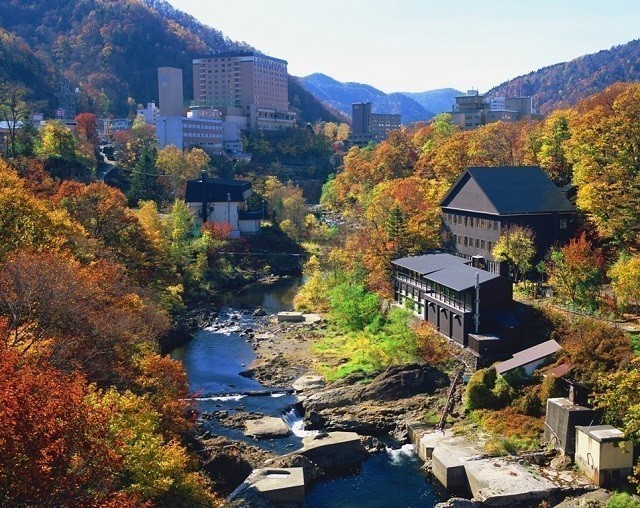
- [For First-Time Visitors to Hokkaido] 7 Essential Hot Springs in Hokkaido
-

- Overseas tourists flock to the natural footbath at Oyunuma River! [Noboribetsu Onsen]
-

- If you have any problems while sightseeing in Hakodate, head to the Community Center! [More than just information, it's a tourist information center]
-

- Shimokawa Town, Hokkaido: "Work-Life Link Tour" | Exploring a lifestyle where work and life are loosely connected [Guest Contribution]
-

- Must-visit restaurants! Two top-rated spots in Otaru to enjoy the best of local cuisine!
-

- A breathtaking view awaits! Enjoy the magnificent scenery from the panoramic vista at Bihoro Pass!
-

- Why not explore the capes of Hokkaido? Here are 8 captivating capes.

Hokkaido from all over Japan! Find affordable Hokkaido package tours here.

Make your trip even more enjoyable! Book your Hokkaido local experience tour here.


Combine flights and hotels freely for great deals! Dynamic Packages
Introducing our sister site (please check it out if you're interested)


 Choose from area
-
 Sapporo/Jozankei
-
 Hakodate, Southern Hokkaido, Okushiri
-
 Northern Hokkaido, Wakkanai, Rishiri and Rebun Islands
-
 Asahikawa/Sounkyo
-
 Eastern Hokkaido (Abashiri, Kitami, Shiretoko)
-
 Kushiro, Akan, Kawayu, Nemuro
-
 Tokachi-Hidaka
-
 Furano, Biei, Tomamu
-
 Noboribetsu and Lake Toya
-
 Chitose, Lake Shikotsu, Yubari
-
 Otaru, Rusutsu, Niseko

 Search by trending tags
Popular article ranking
Yesterday
1 months


